Las Vegas is drawing homebuyers who see beyond the neon and nightlife—a city where sunshine, open landscapes, and distinctive residential communities offer the chance to build a life of their own. It has become a place to put down roots, not simply a destination to visit.
The appeal is easy to understand, but moving to Las Vegas comes with its own realities. Prospective buyers should take time to understand what daily life is really like before choosing where to settle.
If you’re considering moving here, continue reading this Las Vegas relocation guide for a closer look at the neighborhoods, lifestyle, and home-buying considerations worth knowing before making your move.
Table of Contents
Find the Las Vegas community that fits your lifestyle
Choosing where to live is just as important as choosing the house itself. If you’re moving to Las Vegas, start by asking what kind of daily rhythm you want: newer construction or established character? More space or easier access to the city? Proximity to outdoor recreation or restaurants and nightlife?
Those priorities can help narrow down which Las Vegas communities are worth exploring first, from established suburban neighborhoods to luxury enclaves and 55+ communities.
- Seven Hills: An elevated Henderson community known for upscale neighborhoods, parks and trails, scenic valley views, and convenient access to Serket Golf Club and nearby shopping and dining.
- Sun City Anthem: An expansive 55+ Henderson community with multiple clubhouses, fitness centers, pools, recreational facilities, social activities, and sweeping views from its foothill setting.
- North Las Vegas: For buyers watching their budget, North Las Vegas offers more attainable options alongside established neighborhoods, newer master-planned development, and continued commercial and residential growth.
- Henderson: Henderson offers a suburban lifestyle with both established neighborhoods and newer master-planned communities, along with plenty of parks, trails, shopping, dining, and a broad range of homes. It’s a natural fit if you want space without feeling removed from everyday conveniences.
- Foothills: A good fit for buyers who want elevated desert views, established residential neighborhoods, and a peaceful suburban setting close to shopping, schools, and major roads.
- Tuscany Village: Tuscany Village offers a resort-inspired lifestyle, with guard-gated living, Tuscan-inspired architecture, a recreation center, golf, pools, fitness facilities, walking trails, and the Chimera Golf Club located within the community.
- Mission Hills: Ideal if privacy and space matter more than master-planned amenities, with larger lots, custom homes, mountain views, and room on some properties for features such as RV parking, oversized garages, or workshops.
- Green Valley Ranch: An established master-planned community with tree-lined streets, parks, trails, shopping, dining, and convenient access to The District at Green Valley Ranch and other everyday amenities.
- MacDonald Highlands: This 24-hour guard-gated luxury community in the McCullough foothills is known for custom estates, dramatic Las Vegas Valley and Strip views, and luxury amenities, including the DragonRidge Country Club.
- Anthem Country Club: Anthem Country Club is a gated Henderson community with custom homes, panoramic views, and a private club offering golf, tennis, fitness, pools, and country club dining.
- Enterprise: A compelling option for families and professionals who want newer development, shopping, dining, and convenient access to I-215, Blue Diamond Road, the south Strip, and major employment centers.
- Downtown Las Vegas: Downtown Las Vegas offers urban character, independent restaurants, galleries, cultural venues, and areas such as the Arts District and Fremont East, with pockets where getting around on foot is more practical.
Understand the Las Vegas housing market before you buy
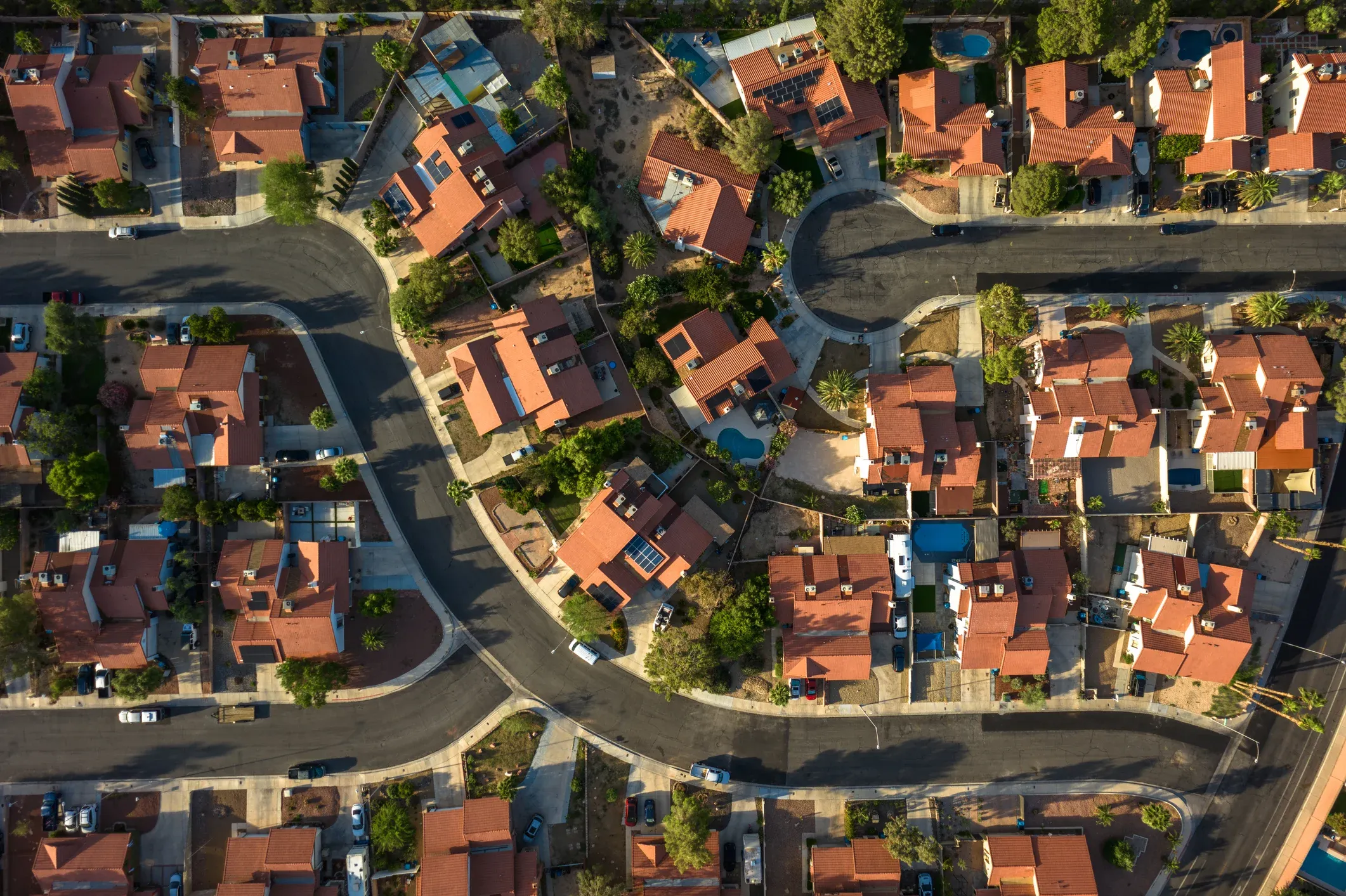
The Las Vegas housing market offers more variety than buyers may expect. Across the valley, options range from Strip-area high-rises and master-planned neighborhoods to age-qualified communities and custom homes overlooking the city.
If you’re moving to Las Vegas, think beyond the headline price and consider which type of home and community best matches your budget, lifestyle, and long-term plans.
- Condos and townhomes: Las Vegas offers everything from high-rise residences near the Strip to lower-density condos and townhomes in master-planned communities. They can be a practical choice if you prefer less exterior upkeep or a lock-and-leave property.
- Suburban single-family homes: Master-planned communities are a major part of the Las Vegas Valley housing landscape. Areas such as Summerlin and Henderson offer established neighborhoods alongside ongoing new construction, often with parks, trails, recreation, and shopping incorporated into or near the community.
- Luxury estates: For buyers prioritizing privacy, space, and a more tailored residential experience, communities such as The Ridges and MacDonald Highlands offer custom homes, guard-gated settings, elevated lots, and dramatic views of the Strip, mountains, or Las Vegas Valley.
- 55+ communities: Las Vegas also has a substantial selection of age-qualified neighborhoods, including established communities such as Sun City Summerlin and Sun City Anthem. These communities can pair single-story homes with clubhouses, fitness facilities, recreation, and organized activities.
As of July 2026, buyers also have somewhat more room to compare their options. Active listings across the Las Vegas metro were up from a year earlier, and homes were spending a median of 57 days on the market. While that doesn’t necessarily mean every property will linger, the broader increase in inventory can give buyers more time to compare homes, communities, and pricing before making an offer.
Budget for more than the purchase price

For anyone thinking about moving to Las Vegas, the cost of ownership can extend well beyond the mortgage. Before you start touring properties, it’s important to have a budget that reflects what homeownership will actually cost—not simply what a lender says you can afford.
- Down payment and closing costs: Know how much cash you’ll need upfront, including your down payment, lender fees, inspections, title costs, and other closing expenses.
- Property taxes and insurance: Add both to your monthly housing budget to get a clearer picture of your true payment.
- HOA dues: If you’re considering a condo or planned community, factor in monthly dues and what those fees cover.
- Utilities and cooling: Las Vegas summers can make air-conditioning one of your largest household utility expenses.
- Landscaping and maintenance: Even desert-friendly yards require irrigation, rock care, trimming, and regular upkeep.
- Renovations and upgrades: Look beyond move-in readiness; older homes may need updates, while new builds can cost more once you add preferred finishes and features.
A realistic budget gives buyers a clearer sense of what they can comfortably spend when buying a home in Las Vegas, and which properties may stretch that comfort too far.
Work with a local Realtor
Buying a home from outside the area can make an already complex process feel even more complicated. For buyers moving to Las Vegas, a Realtor familiar with relocation can provide the local perspective that online listings cannot.
A reliable Las Vegas relocation realtor should be able to help you:
- Compare neighborhoods: Discuss your lifestyle, commute, and priorities to narrow down communities worth exploring.
- Tour homes remotely or in person: Walk through properties together and assess the home, its condition, surroundings, and potential fit.
- Understand the market: Review comparable sales, inventory, and neighborhood trends to gauge whether a property is appropriately priced.
- Prepare for financing: Work with your Realtor and lender to understand your pre-approval, buying power, and financing options before making offers.
- Complete due diligence: Coordinate inspections, review property information, and identify questions to investigate before committing.
- Develop an offer strategy: Discuss comparable sales, contingencies, seller expectations, and timelines before deciding how to structure your offer.
- Build a local network: Get recommendations for inspectors, contractors, lenders, title professionals, and other trusted service providers.
- Manage the transaction: Stay on top of deadlines and communication between the professionals involved in your purchase.
For buyers making the transition, Josie Stewart can provide that local perspective, helping turn early research into a more confident purchase.
Your Las Vegas Homebuying Checklist
Buying a home in Las Vegas involves more than finding the right property. Use this checklist to stay focused on the financial, lifestyle, and neighborhood factors that can shape your decision.
- Keep the bigger picture in mind: For buyers relocating to Las Vegas, the right home should support the lifestyle you want to build there.
- Define your lifestyle and priorities: Consider your daily routine, commute, hobbies, household needs, and long-term plans before browsing listings.
- Establish a realistic budget: Calculate what you can comfortably spend each month, including the mortgage, taxes, insurance, HOA dues, utilities, and maintenance.
- Narrow down neighborhoods: Compare communities based on location, amenities, commute times, housing options, and overall character.
- Get mortgage pre-approved: If financing, understand your borrowing power before touring homes.
- Work with a local relocation specialist: Choose a professional who understands the needs of buyers moving to Las Vegas.
- Tour homes and neighborhoods: Look beyond the property itself to consider noise, traffic, surroundings, and your potential daily routine.
- Complete inspections and due diligence: Investigate the property’s condition, documents, and any issues before committing.
- Make a market-informed offer: Consider comparable sales, market conditions, and the property’s overall value, not just the asking price.
FIND YOUR PLACE IN LAS VEGAS
Moving to Las Vegas is about more than finding the right house; it’s about finding a place that fits the life you want to build.
Whether you’re buying or selling, a trusted Las Vegas relocation realtor like Josie Stewart can provide the local knowledge and personalized guidance to make the process feel more manageable.
If you’re ready for a more confident, stress-free home-buying journey in Las Vegas, contact Josie Stewart at 702.510.9331 or send her a message to get started.